
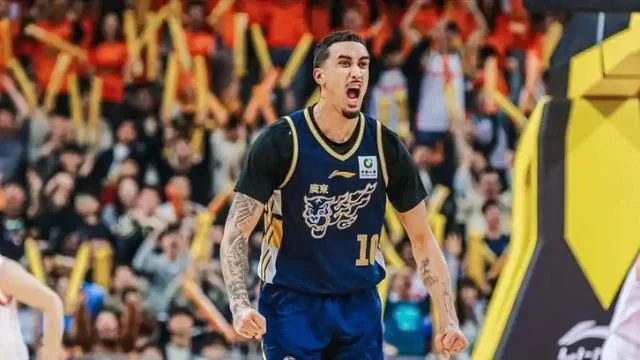
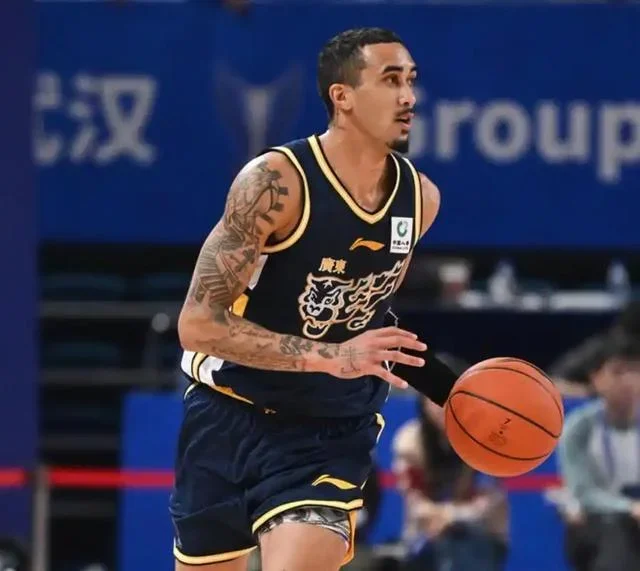
In the decisive Game 3 of the CBA quarterfinals, the loudest sounds came not just from the roaring fans but also from the referees’ whistles. Just five minutes into the first quarter, Zhou Qi was called for a foul after an offensive push. He pointed at the referee and muttered, but Zhai Xiaochuan quickly pulled him away—this was no time for recklessness.
According to league rules, players cannot directly argue with referees after a foul; they must wait for a dead ball and let the head coach handle it. During last year’s Beijing-Guangdong Game 2, Du Feng nearly received a technical foul for arguing while the ball was live, until an assistant coach stepped in to calm things down.
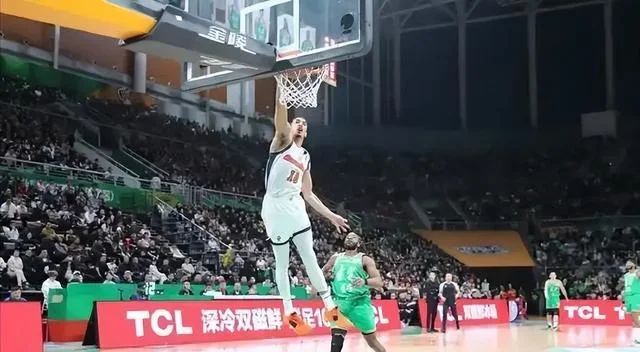
Similar drama unfolded in this game: Guangdong’s Quinn was called for an offensive foul during a drive. He wanted to argue but saw Du Feng shaking his head on the sidelines and immediately backed off. This unwritten rule isn’t in the official rulebook, but everyone must follow it, or face consequences.
Speaking of rules, the officiating scale became a hot topic among fans. For instance, Beijing’s Spellman blocked Quinn’s shot in the third quarter, but a foul was called—replays showed it was a clean block. In the fourth quarter, Guangdong’s Zhang Haojia pushed Zeng Fanbo while rebounding, but no whistle was blown. Such ambiguous calls are common in the playoffs, where high intensity and fatigue amplify emotions over marginal decisions.
This isn’t the first time in CBA history. During the 2024 Beijing-Guangdong clash, Du Feng was ejected for disputing calls, prompting the league to adjust playoff referee communication rules, allowing coaches to discuss details during timeouts. In this game, Du Feng wisely used timeouts to adjust tactics rather than confront referees—a sign of progress in on-court etiquette.
Guangdong’s comeback and the shadow of player transitions
Under the 2025-2026 CBA playoff format, the quarterfinals were a best-of-three series with a 2-1 home-away schedule. Beijing entered as the No. 4 seed, while Guangdong was No. 3. Beijing had home-court advantage and took an early lead in the series, but Guangdong won two straight games to close it out at Wukesong.
This series completely reshaped the playoff landscape. Many expected the semifinals to feature Shanghai, Guangsha, Shenzhen, and Beijing, but Guangdong’s upset put them on a collision course with the winner of Liaoning and Zhejiang.
The CBA’s ranking logic has shifted from single-star dominance to overall roster depth. Last year, Guangdong relied heavily on Yi Jianlian, but after his retirement, the team leaned on the backcourt duo of Quinn and Hu Mingxuan, along with young players like Zhang Haojia and Du Runwang, to reverse the series.
Zhang Haojia’s buzzer-beater was breathtaking. Born in 1999, the 27-year-old has become Guangdong’s starting forward. He started as a bench player with limited minutes but earned his starting role through daily extra practice on three-point shots.
Many fans are now discussing whether players like Zhang Haojia will transition into coaching after retirement, similar to Meng Lingyuan, who went from a CBA defensive specialist to a FIBA-certified coach in 13 years. This path—starting as a youth team coach, then moving to assistant coach, and finally head coach—is common among CBA players.
Beijing’s head coach, Jie Libin, is a prime example. A former Beijing guard, he coached the youth team before becoming Beijing’s head coach, with five years of experience. In this game, however, his tactical adjustments were slow. For instance, when Guangdong used perimeter passing to exhaust Zhou Qi, Jie didn’t switch to a zone defense until the third quarter—too late.
This highlights the pain point for former players turned coaches: they were used to playing themselves, and adjusting quickly to coaching demands requires time.
The bench scoring gap was also telling: Beijing’s reserves poured in 57 points, while Guangdong’s managed just 29. Despite home-court advantage, Beijing’s reserve unit couldn’t match Guangdong’s depth. Guangdong’s backup guard Xu Jie, for example, hit two crucial three-pointers that disrupted Beijing’s defense.
The hope is to see more young players like Zhang Haojia grow, and more players like Meng Lingyuan transition into coaching, making the CBA more professional and exciting. Basketball is not a one-man game—it’s the passion of a team.